ASO at agency or corporate scale is not just a bigger version of managing one app. The logic is different. When you have multiple products, multiple markets, and every client or internal team pulling in a different direction, your processes either work as a system or they don't work at all.
A mobile game and a banking app have almost nothing in common from an ASO standpoint. Different users, different session patterns, different conversion benchmarks. What drives installs for a game — loud screenshots, aggressive CTAs — can kill trust for a fintech product. And a strategy that works in the US often falls flat in Brazil: different search behavior, different competition, and entirely different keywords.
Organic traffic is getting more attention than it used to. As ad tracking restrictions tightened, paid acquisition became more expensive and less predictable. Teams are looking for channels that don't get more costly with every platform update. ASO is one of the few. But only if there's a real system behind it, not just intuition and manual work.
The point of a structured workflow is simple: what works for one app should carry over to the next. Not rebuilt from scratch — carried over. That's the only way to grow without growing your team at the same rate.
The Challenges of Managing ASO Across Apps, Markets, and Clients
More apps doesn't just mean more work. It means different kinds of problems.
Start with the obvious: a game and a banking app require a different approach to every decision. Different users, different session frequencies, different success signals. One template doesn't fit all of them, and keeping the nuances of each product in your head only works up to about five apps.
Localization is a separate challenge that's easy to underestimate. Where a US user searches "loan calculator," a Brazilian user types "como calcular juros do empréstimo." That's not a translation problem — it's a different semantic landscape, different competition, different visual expectations. Metadata needs to be rebuilt for each market; sometimes the app name needs to change. Teams doing this for the first time usually don't anticipate how much work it actually is.
At an agency, you also have clients with different expectations on top of everything else. One client wants a detailed weekly report breaking down every keyword. Another wants one number: did installs go up? Without standardized templates, every report is written from scratch, and that ends up taking more time than the actual optimization work. At large companies, approvals make things worse: editing one sentence in an app description can require sign-off from three departments and take weeks. What gets published is rarely what the user needs — it's what everyone agreed on.
Keyword Tracking and Competitor Monitoring at Scale
When you have dozens of apps in your portfolio, keeping keywords in a shared spreadsheet and monitoring competitors by hand stops being viable.
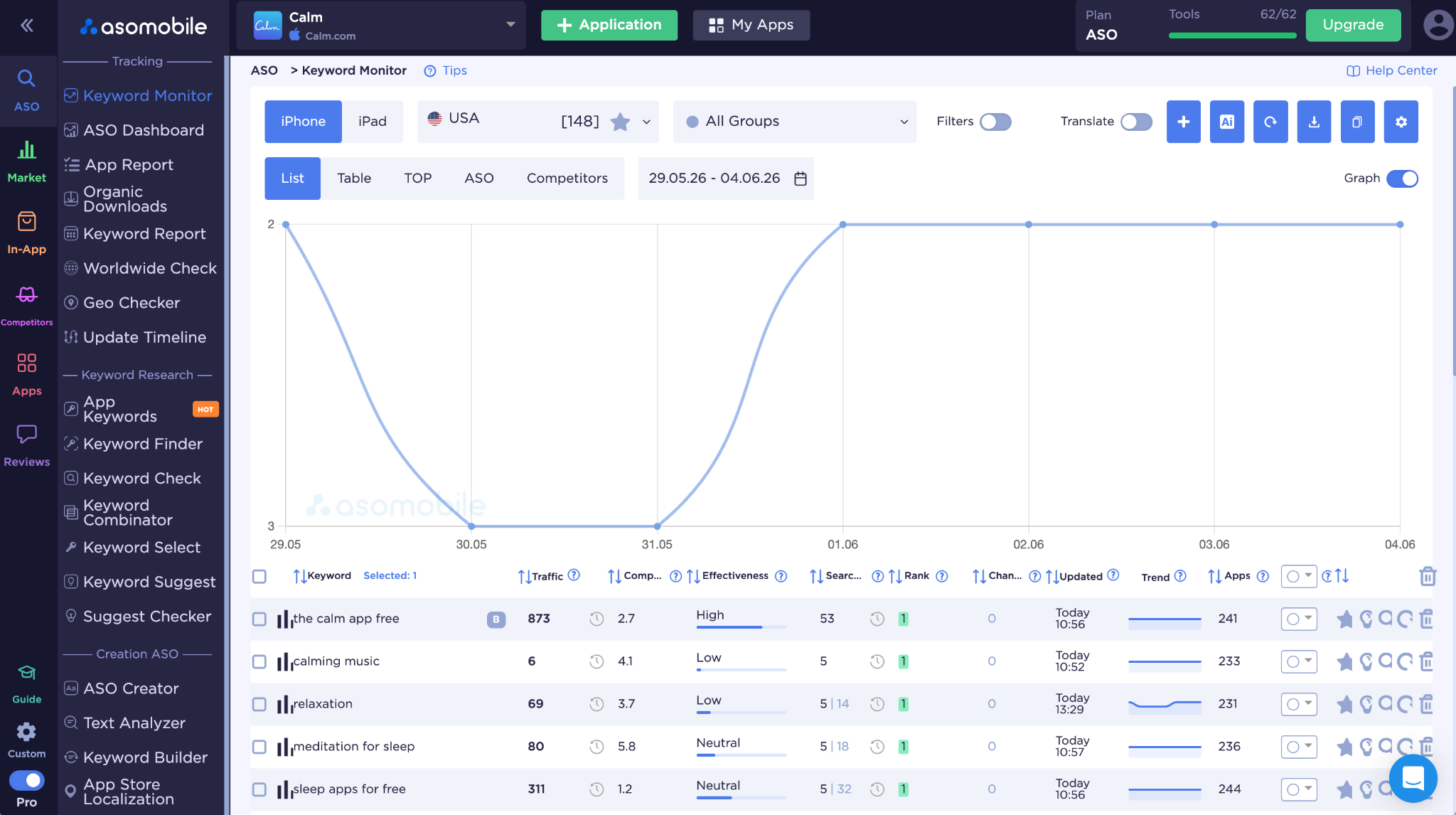
A centralized keyword repository. All keywords for all apps and all markets in one place, tagged clearly by product, country, and category. This structure immediately surfaces conflicts — when two apps in the same portfolio compete for the same queries and eat each other's traffic. Without it, you can go months without noticing you're working against yourself.
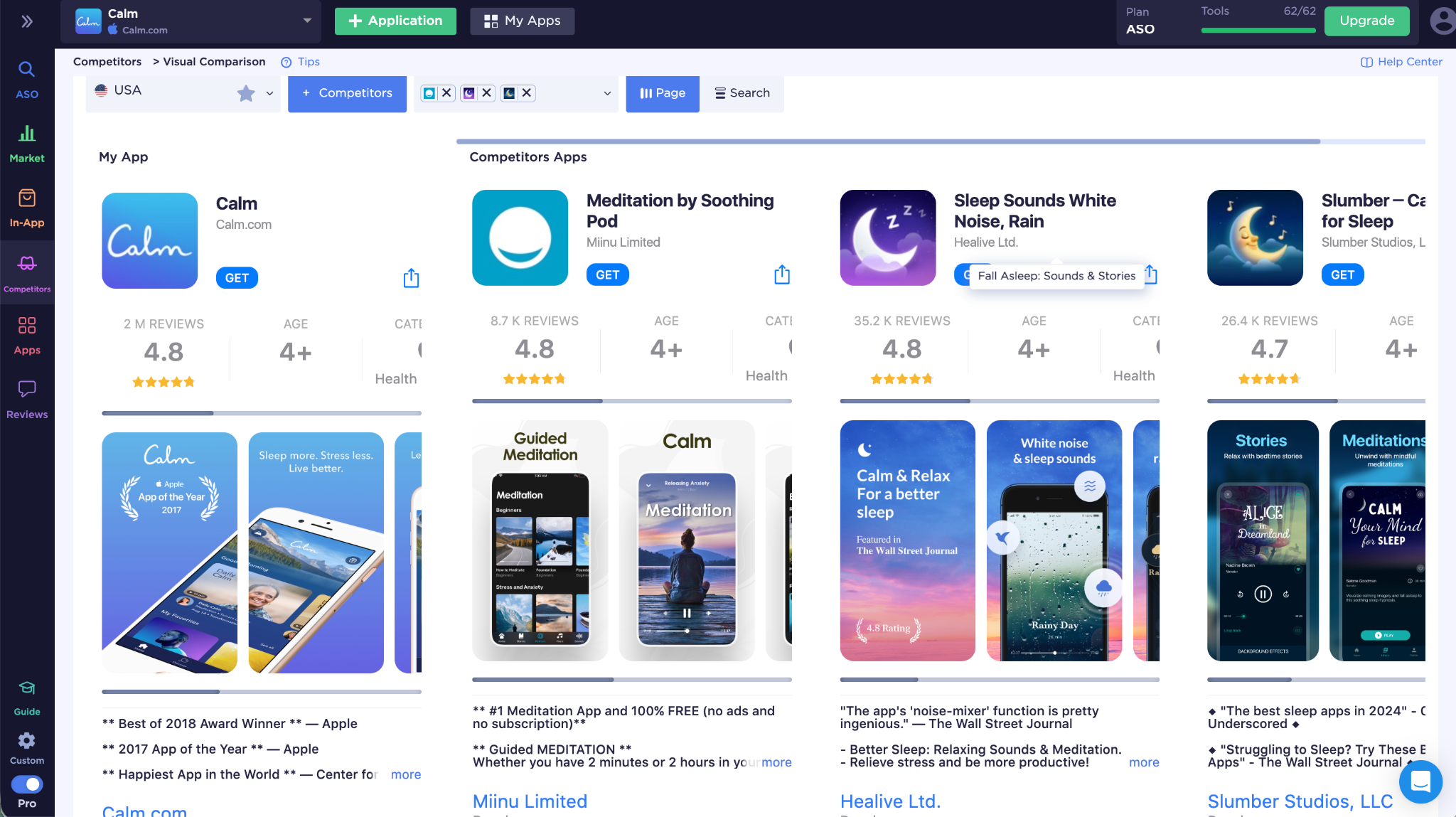
Per-app competitor monitoring. For each app, you track 5–10 direct competitors: their metadata, keyword rankings, and visual changes. You also occasionally look at trends across the whole portfolio — if several apps from different categories start losing positions on similar queries at the same time, the algorithm probably changed.
Category benchmarking. Conversion rates and visibility norms vary a lot by category. You need to know what's normal for your specific product type in your specific country. That's how you set realistic goals: not chasing an abstract ideal, but beating the apps next to you in the charts.
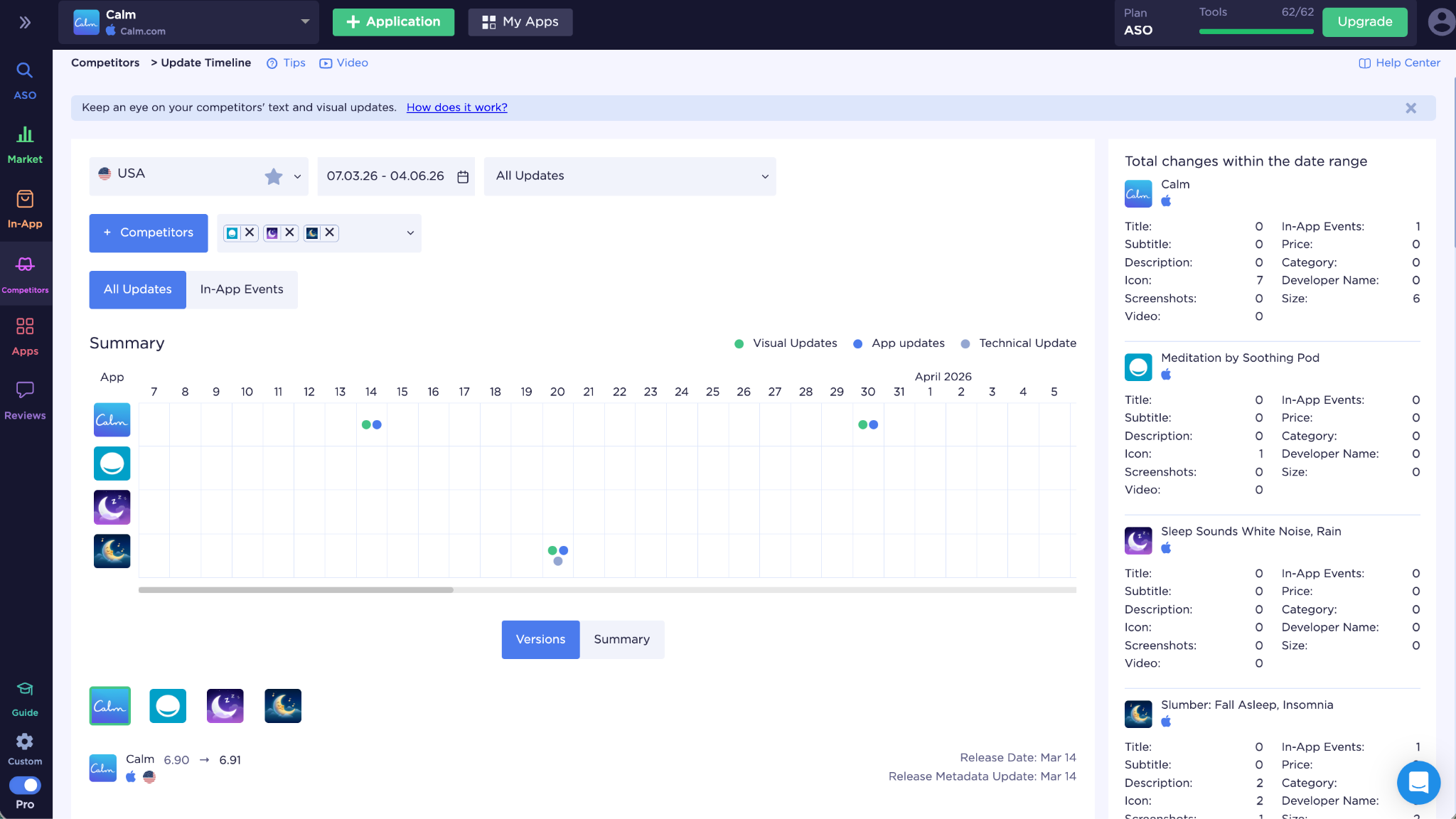
Reacting to competitor moves quickly. A competitor runs a new screenshot test in Italy. Instead of noticing it by accident a month later, you get an automatic alert with the date and a link. Your team reviews it and decides whether to propose a similar experiment to the client.
Market Intelligence and Reporting for Stakeholders
Different people look at ASO from different altitudes — and they need different data.
An ASO specialist looks at keyword rankings, page conversion, and organic installs — that's their daily dashboard. A growth lead looks wider: how the channel affects CAC and retention, what ASO contributes to the overall unit economics. A director or founder won't get into individual keyword positions — they want strategic trends: is organic share growing, how does the company look against competitors.
The problem is that the data is usually scattered: rankings in one tool, conversion analytics in another, reviews in a third. A good dashboard automatically connects metadata changes to install trends and updates. Instead of manually pulling data from five systems, you configure a single source of truth. That alone saves a few hours per person per week on the team.
A Practical ASO Workflow for Agencies
Without a shared rhythm, things fall apart fast when you're managing multiple apps and clients. A five-step cycle keeps any portfolio size under control.
Step 1. Audit. Establish the baseline: keyword rankings, visibility, competitors, current visual assets. This is what you'll measure everything against. Without it, every change is a guess. It also helps to gather client input at this stage — what's bothering them, what goals they're working toward.
Step 2. Strategy. Define where you're going: grow visibility on new queries, lift page conversion, increase organic share. For a portfolio, you also need to prioritize — which markets and products matter most right now. This is also the moment to align expectations: clients need to understand that ASO doesn't deliver results in two weeks.
Step 3. Implementation. Update metadata, run visual tests through PPO, or build separate pages for different audience segments (CPP). One non-negotiable rule: log every change with a date. That's the only way to connect results to specific actions later. For multiple clients, keep a separate hypothesis log for each.
Step 4. Monitoring. Track rankings, visibility share, competitor activity. Pay close attention to keyword gaps — queries where you should be showing up but aren't. Automated reports eliminate the need to check everything every week manually.
Step 5. Reporting. Show clients a clear before-and-after: we did this, here's what happened—no walls of numbers for the sake of numbers. A standard dashboard template across all apps saves time and makes reports predictable for everyone involved.
This cycle works the same way for one app or a portfolio of hundreds — the difference is just the volume of data. What matters is not skipping steps and keeping everything in one place; otherwise, the process breaks down into disconnected actions.
How ASOMobile Helps Enterprise Teams and Agencies
Scattered data, hours of manual reporting, monitoring dozens of apps by hand — all of that goes away when everything is in one place.
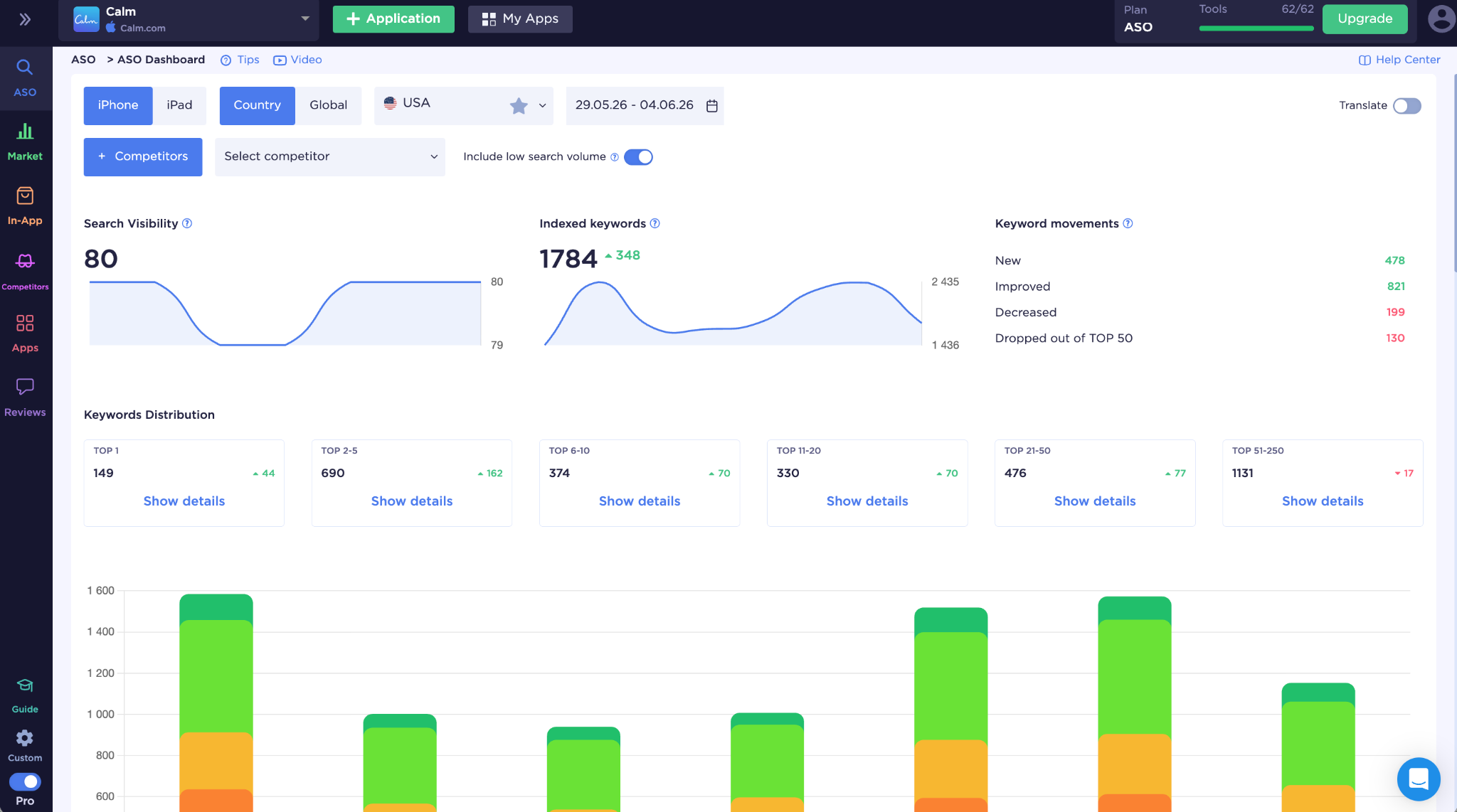
One data source for all metrics. Instead of keeping rankings in one tool, competitor analysis in another, and reviews in a third — everything in one place. ASOMobile combines keyword tracking, competitor monitoring, market analysis, and app page changes. The team stops losing time switching between tabs.
Works at any scale. The platform covers 90 countries across key ASO metrics, including local search behavior and competitor data—all in one dashboard instead of dozens of spreadsheets.
For enterprise teams, two tools save the most time:
API access. ASOMobile data can be connected to internal BI systems or custom dashboards — no manual CSV exports or table updates.
Geo Checker. Shows how your app and competitors appear in different countries: metadata, screenshots, preview video — all without switching regions or using a VPN. Particularly useful for agencies reporting to clients across multiple markets.
| Team Need | ASO Process | Weekly/monthly reporting |
| Track keywords for 20 apps across 10 markets | Multi-app keyword tracking | Centralized repository with filtering by app, region, and category |
| Automatically prepare client reports | Weekly / monthly reporting | API for exporting data to client dashboards, ready-made templates |
| Monitor competitors over time | Competitor monitoring | Scheduled tracking of metadata, screenshots, and keyword rankings |
Final Recommendations
ASO at corporate or agency scale is about systems, not heroics.
Start with an honest look at your workflow. Where does your team spend most of its time? Probably on manual data collection and approval rounds — not on analysis and testing. Those are the bottlenecks worth fixing first.
Next, consolidate. Five tools, three spreadsheets, and a Slack thread are not a system. One source of truth for key metrics reduces confusion and makes data more trustworthy. The team stops second-guessing the numbers.
Standardized report templates seem like a small thing until you calculate how much time goes into reports without them. Clients get a familiar structure; the team doesn't have to rebuild every report from scratch.
Competitor monitoring, rank tracking, weekly data collection — all of this can be set up once and run automatically. That frees up the team for what the whole operation is actually for: figuring out why conversion dropped, forming a hypothesis, and testing it.
ASO — simple and affordable 💙
FAQ: Frequently Asked Questions
Enterprise ASO is managing App Store and Google Play optimization at portfolio scale: multiple apps, multiple markets, and multiple teams or clients simultaneously. Unlike single-app work, it requires standardized processes, automated reporting, and cross-team coordination.
Through a shared workflow: audit → strategy → implementation → monitoring → reporting. Every change is logged with a date and outcome. Each client has a separate hypothesis log. Standard dashboard templates mean reports don’t get built from scratch every time.
The minimum: keyword ranking trends, search visibility changes, app page conversion, organic installs for the period, and competitor comparison. A good report doesn’t just show numbers — it shows the connection between what changed and what happened as a result.
Through automated monitoring: metadata changes, new screenshots, keyword ranking shifts. For each app, pick 5–10 direct competitors and set up alerts for changes. That way you’re reacting to market signals within days, not months.
You need a platform that brings keyword tracking, competitor monitoring, and analytics into one place. ASOMobile covers 90 markets, supports monitoring for any number of apps, and provides an API for integration with internal dashboards.